The Federal Highway Administration's Geotechnical Aspects of Pavements manual (section 7.6) gives the usual starting point: lime is generally considered for clay soils with a plasticity index (PI) above about 10 to 12, and cement for lower-plasticity soils.
That rule of thumb is not a design. The stabilizer, application rate and depth come from laboratory mix design testing, as laid out in FHWA's stabilization mix design appendix. The lab work is done for the project engineer or geotechnical engineer; Kuesel follows that mix design in the field. When the choice is between treating the soil and removing it, our guide to lime vs cement vs undercut compares the options.
Lime stabilization (quicklime)
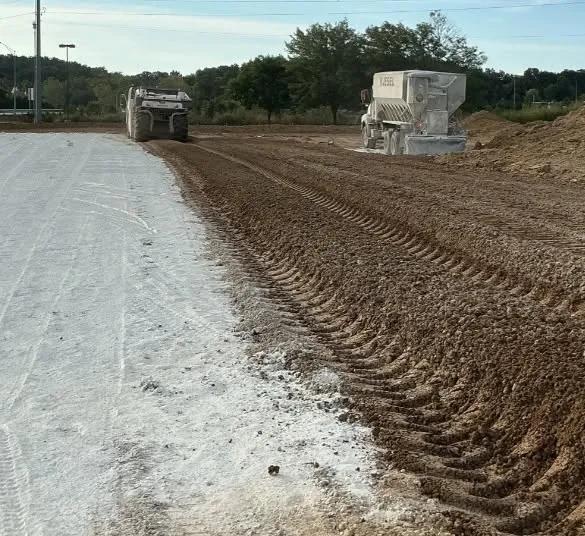
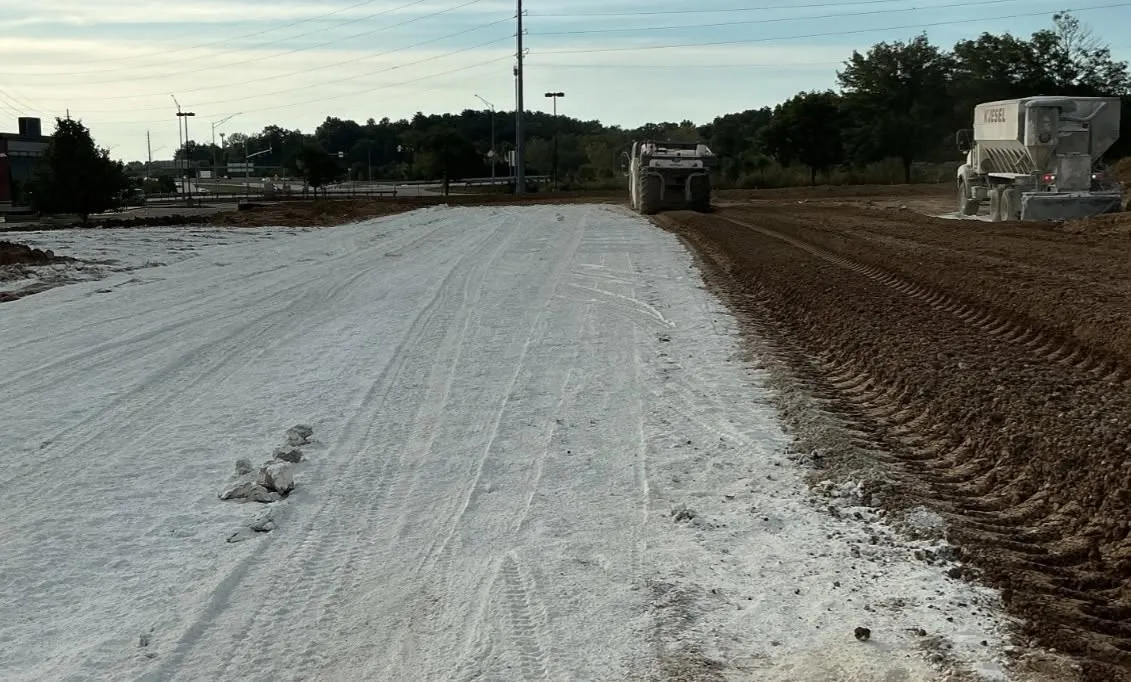
Lime is generally used on high-plasticity clay — the kind of soil common in the St. Louis area that turns soft and sticky when wet. In the short term it modifies the clay: it dries the soil, lowers the plasticity index and makes it easier to work and compact.
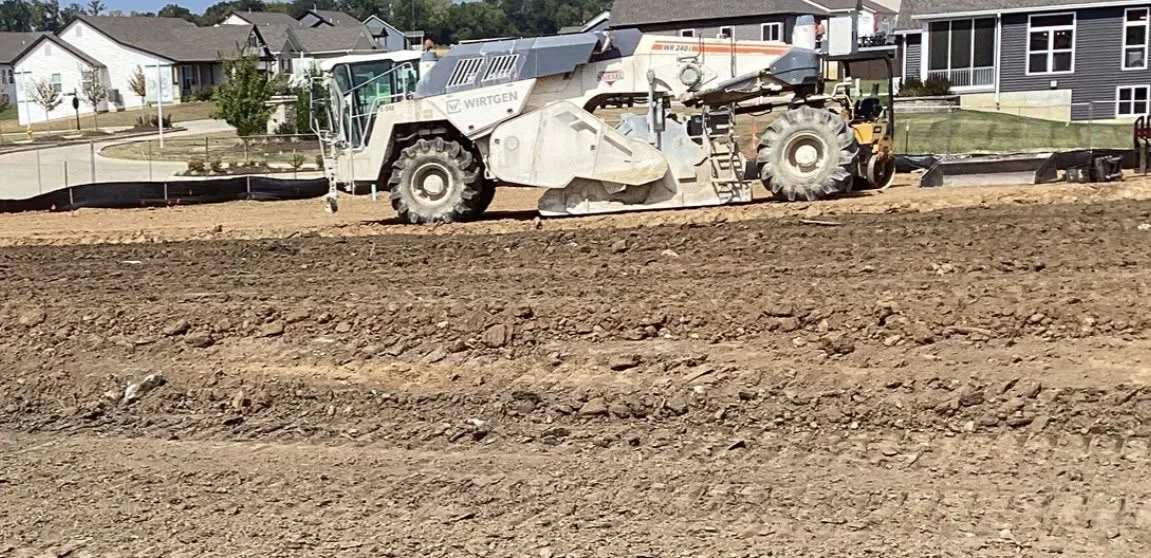
Over the longer term, lime reacts with the clay minerals in a pozzolanic reaction that adds strength. Specifications often call for a mellowing period between initial and final mixing so the lime can work through the clay before the layer is finished.
Cement stabilization
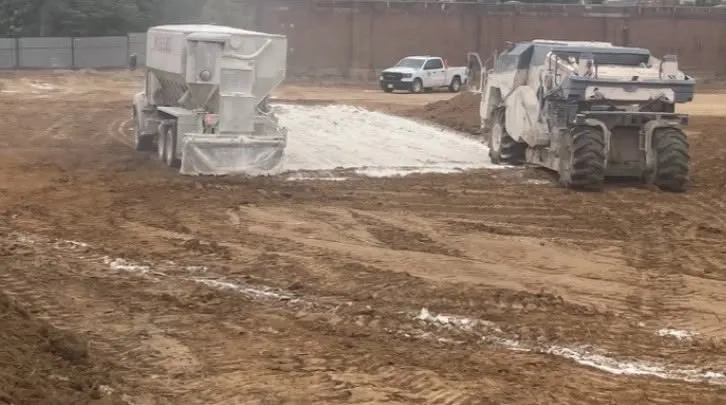
Portland cement hydrates and binds the soil particles together. It is generally suited to low-plasticity, silty or granular soils, and it is commonly the agent used in full-depth reclamation of failed pavement.
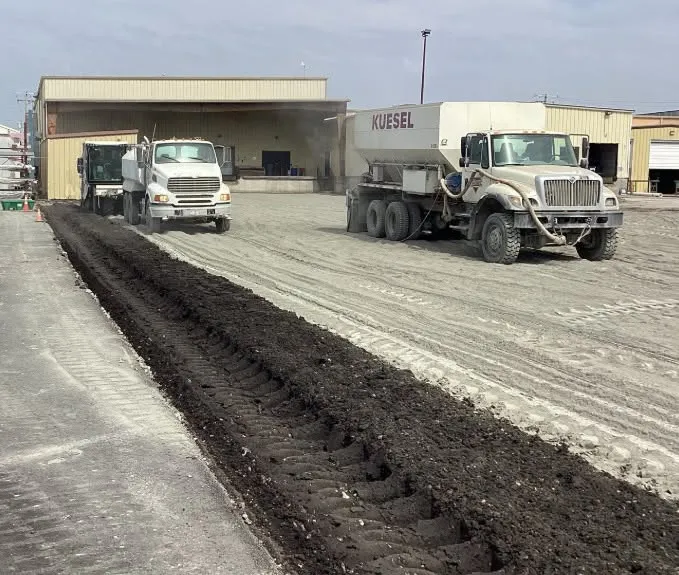
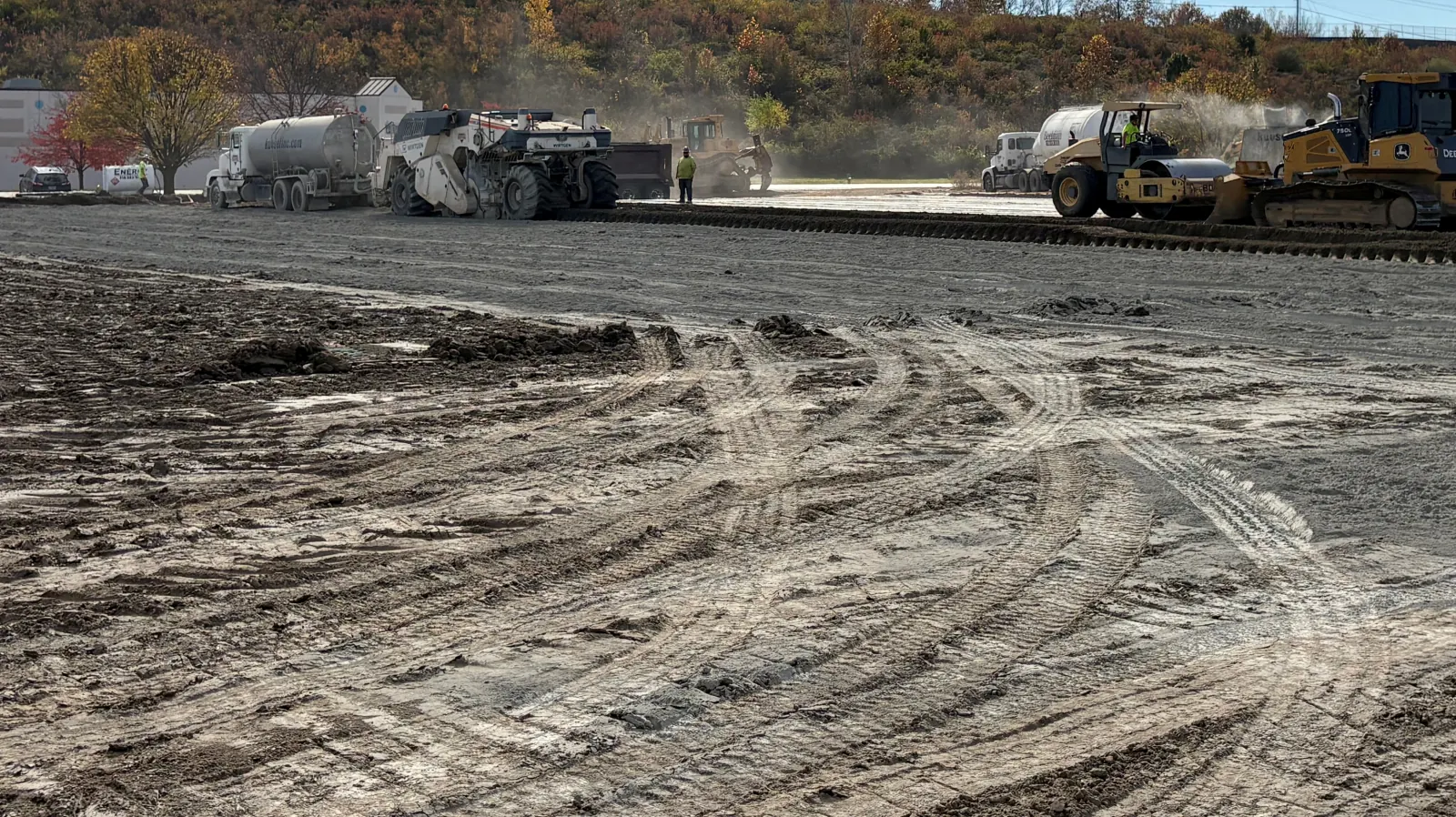
Because cement starts to set once it is mixed with water, compaction must be completed within the working time allowed by the specification after mixing. That makes sequencing of spreading, mixing and compaction critical.
Fly-ash stabilization
Class C fly ash is self-cementing and can stabilize soil on its own. Class F fly ash typically needs lime or cement as an activator. Availability varies by region, so the engineer's choice depends partly on what can be supplied for the project.
Cement-modified soil (CMS)
Cement-modified soil uses a lower cement content to improve workability, cut the plasticity index and give the job a working platform. It differs from cement-stabilized subgrade or cement-treated base, which are designed to reach a strength target. Our guide on cement-modified soil vs. cement-treated base covers the difference in more depth.
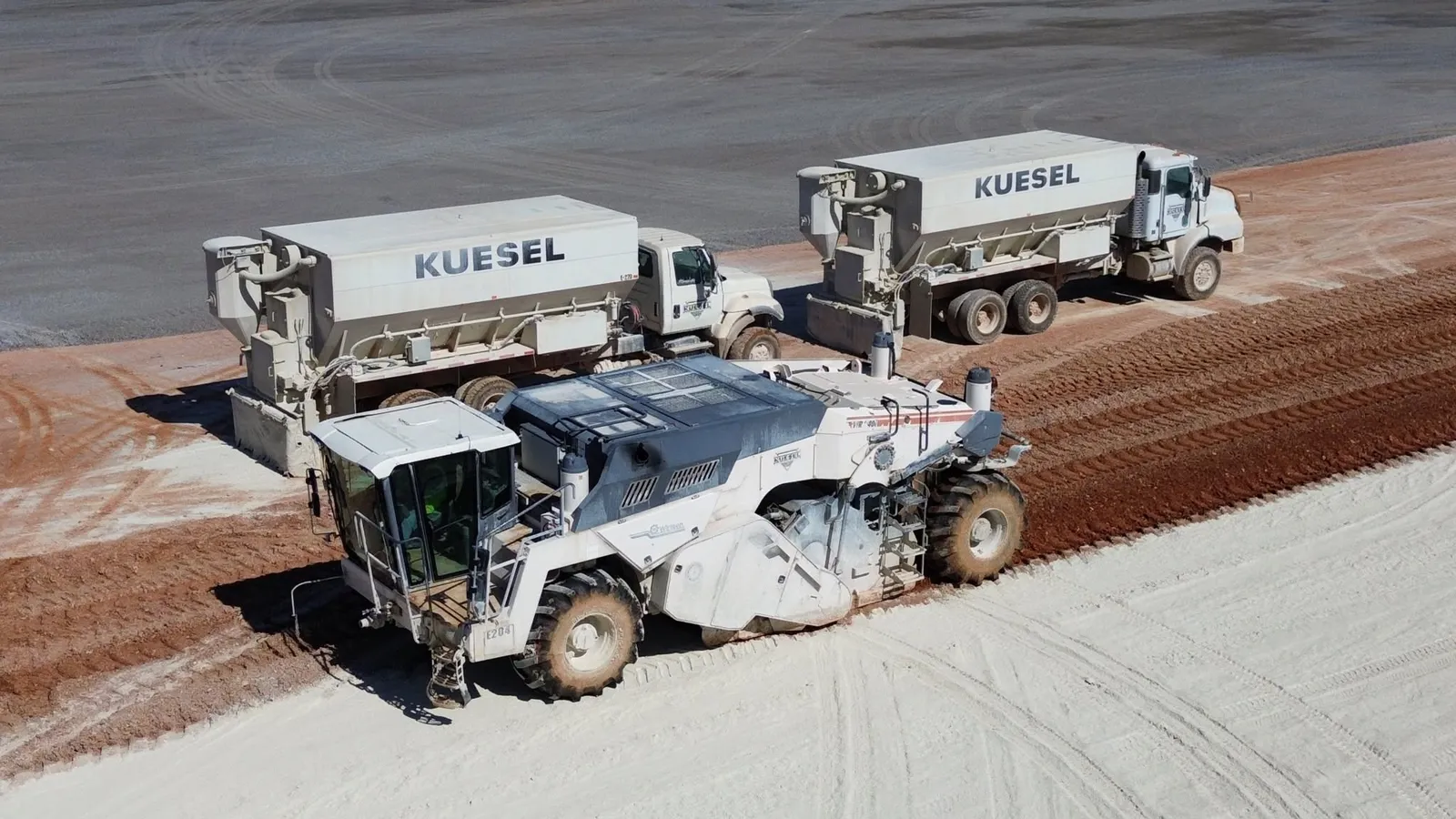
Kuesel self-performs lime and cement stabilization and FDR. Fly ash and CMS are described so the options in a spec are clear.