
Written and reviewed by the Kuesel field operations & estimating team
Last reviewed:
Kuesel is a family-owned site work and utility contractor based in O'Fallon, MO, building sites across St. Louis since 1963.
Stormwater requirements shape site plans more than many developers expect. Detention and water-quality features take land, outfalls can need off-site work, and the review process affects the schedule. Requirements differ by location and change over time, so this guide does not list design criteria. It explains who generally reviews what, the common options, and what to plan for. Your civil engineer and the reviewing agency set the actual requirements, and the official sources linked below are the place to confirm them.
Who reviews stormwater depends on where the site is
In the St. Louis area, the reviewing agency depends on the parcel's location:
- St. Louis City and most of St. Louis County: the Metropolitan St. Louis Sewer District reviews stormwater for development. See MSD's official site.
- St. Charles County: unincorporated areas are reviewed by the county, and cities within the county often have their own review. See St. Charles County government.
- Individual cities: many municipalities add their own stormwater, grading or land disturbance review on top of the regional requirements.
- Illinois Metro East: sites follow Illinois state rules and local county and city requirements. Confirm with your civil engineer.
Some sites fall under more than one reviewer. Your civil engineer should confirm the full list early in design.
Detention: holding water back
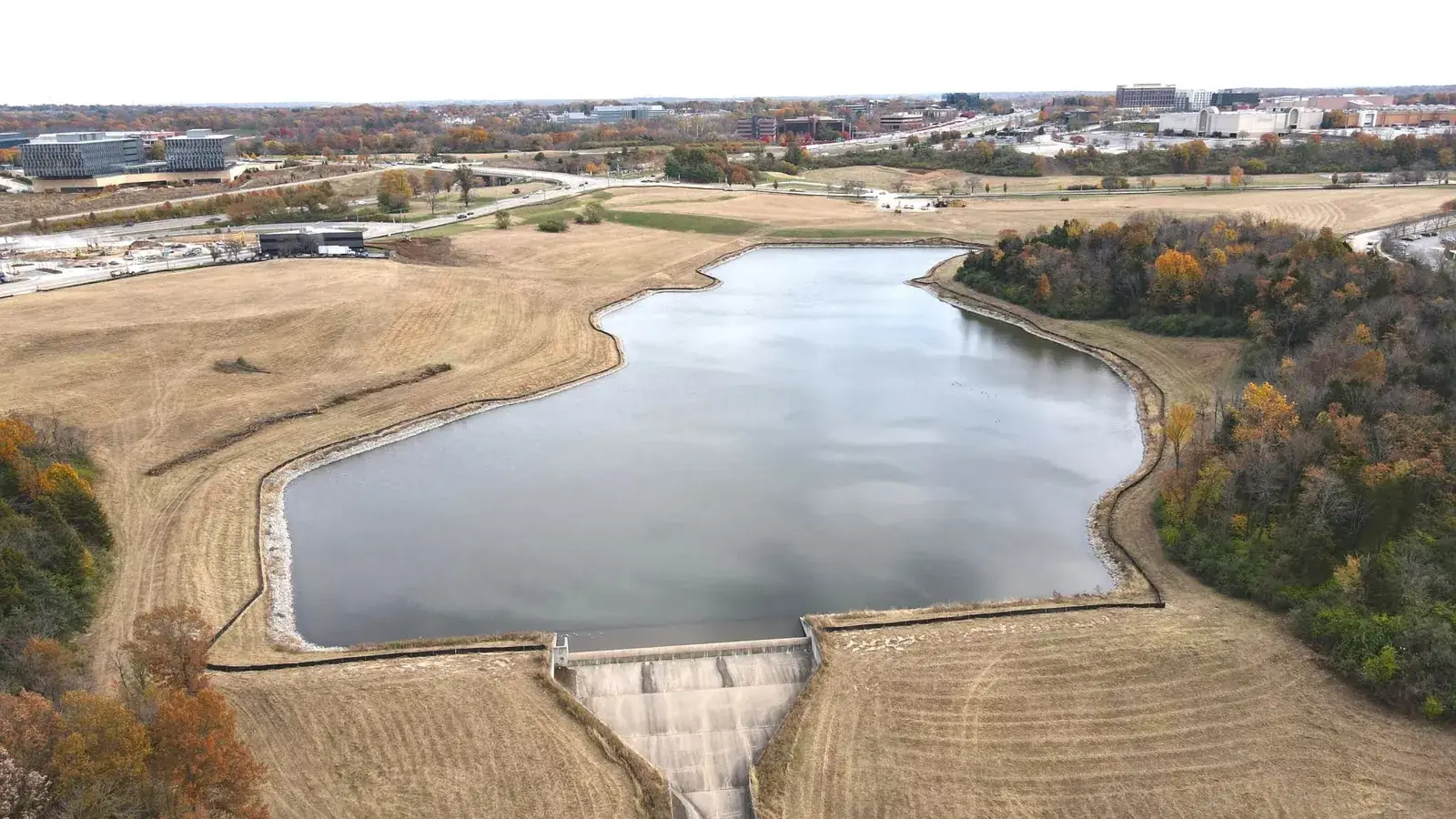
Detention controls how fast stormwater leaves a developed site. The common forms are:
- Dry detention basins that fill during storms and drain afterward
- Wet ponds that hold a permanent pool
- Underground detention chambers or pipes, used where land is too valuable for a basin
- Combined features that also provide water-quality treatment
Each takes a different amount of land, cost and maintenance. Underground systems save surface area but add cost and need access for cleaning. A basin's excavation can also supply fill for the site, which ties detention into the cut and fill balance.
Kuesel builds storm sewer and detention as part of its site utility work.
Water quality and bioretention
Many reviewers also require water-quality treatment, often through bioretention: shallow basins with engineered soil, plants and underdrains that filter runoff. Bioretention depends on the right soil media, underdrain installation and careful construction to keep it from clogging. Kuesel builds bioretention basins and has completed MSD-permitted stormwater work. For existing basins that need cleaning or repair, see bio pond maintenance.
Land disturbance permits
Disturbing land during construction usually requires stormwater permit coverage. In Missouri, the Department of Natural Resources administers construction land disturbance permitting; its official permit page explains when coverage is needed. Local governments may also issue their own land disturbance or grading permits. Plan for:
- A stormwater pollution prevention plan and who maintains it
- Perimeter controls, inlet protection and a construction entrance
- Inspections and maintenance after rain
- Final stabilization before permit coverage ends
What to put on the concept plan
- A realistic footprint for detention and water-quality features
- The outfall and any downstream work it may need
- Drainage entering the site from neighboring land
- Space for erosion control and sediment basins during construction
- Access for future maintenance of basins and underground systems
How stormwater affects the schedule
Stormwater review is often on the critical path to a grading permit, and resubmittals add time. Basins and outlet structures usually need to be built early, because they serve as sediment control during construction and must be working before upstream areas are paved. Underground detention systems have their own delivery lead times. Building these into the schedule from the start avoids a site that is graded and waiting on a permit or a structure.
Plan for maintenance after turnover
Detention and bioretention features need upkeep: sediment removal, vegetation care, outlet cleaning and inspection of underground systems. Reviewers often require a maintenance agreement or plan. Designing access for equipment, choosing features the owner can maintain, and recording who is responsible protects the investment and keeps the site in compliance. For maintenance and repair of existing basins, owners can use our hydrovac and pond crews.
For existing basins, see bio pond and basin maintenance.
How a site contractor helps
We build detention basins, outlet structures, storm sewer and bioretention, and install water and sewer utilities. During design, we can tell you what a basin or underground system is likely to involve to build and where it affects the grading balance. That's part of our Early Site Budget for developers. We work across St. Louis, St. Peters and Maryland Heights, among other areas.
See also the due-diligence checklist and the resources library.
Questions
- Does MSD review stormwater for every St. Louis-area site?
- No. MSD serves St. Louis City and most of St. Louis County. Sites in St. Charles County, other counties, and Illinois are reviewed by other agencies and local governments.
- Is underground detention better than a basin?
- It depends. Underground systems save surface land but generally cost more and need maintenance access. Basins take land but can supply fill. Your civil engineer weighs the options against the site.
- Do I need a land disturbance permit?
- Most construction that disturbs land needs stormwater permit coverage, and local permits may apply too. Check Missouri DNR's official permit page and your local government's requirements.
- Does this guide list design criteria?
- No. Requirements vary by agency and change over time. Use the official sources and your civil engineer for criteria.
This guide is general information from a site contractor, not engineering or legal advice. Your engineers and the reviewing agencies set the requirements for your project.