
Storm Sewer Contractor in St. Louis
Kuesel installs storm sewer for developers, general contractors and owners on private commercial and industrial sites in the St. Louis area. Our crews build the storm pipe, inlets, junction boxes, headwalls and outlet structures, tie the system into detention, and build underground detention and bioretention basins. Because the same company grades the site, the storm system is scheduled with the earthwork, and structures are often set early so they can work as sediment control while the rest of the site is built.
Get a Bid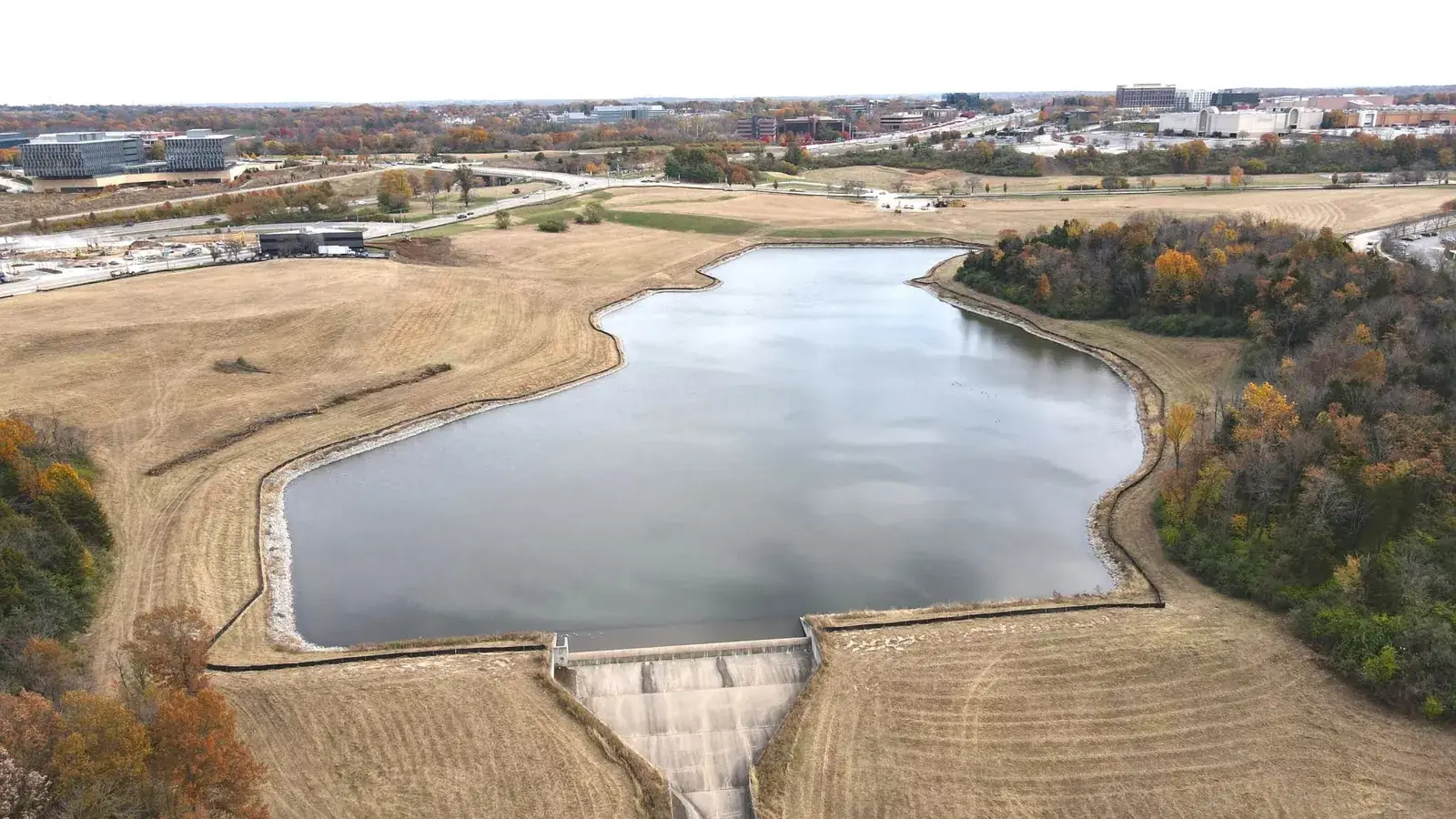
Supporting credentials: MSD (Metropolitan Sewer District) vendor · MSD Project Clear BMP Manual on our jobs
Storm pipe, inlets and structures.
A site storm system collects runoff from roofs, paving and landscaped areas and carries it to detention, a water-quality feature or an outfall. We install the storm pipe and every structure along it: curb and area inlets, junction boxes and manholes where lines meet, headwalls where pipe daylights, and the outlet structures that control what leaves a basin.
Pipe goes in at the grades on the civil plans, with bedding and backfill to the project specifications, and structures are set to the elevations the paving contractor will build to. Getting inlet rims right is what keeps water from ponding in a new parking lot. Storm is one part of the package we self-perform as an underground utility contractor, alongside water and sanitary.
- Storm sewer pipe
- Inlets and area inlets
- Junction boxes and manholes
- Headwalls
- Outlet and control structures
- Riprap outlet protection
Tie-ins to detention and bioretention.
Most private sites have to hold runoff back and treat it before it leaves. We build open detention basins, underground detention systems and bioretention basins, and tie the storm sewer into each of them. Underground systems save surface land; basins take land but can supply fill to the grading balance. The civil engineer chooses the approach, and we build it as designed.
See our bioretention basins page for how we build those water-quality features, and our MSD work page for stormwater projects under MSD permits.
Structures built early as sediment control.
On many sites the storm structures and detention basin go in early, before the buildings and paving, so they can serve as sediment control during construction. Inlets get protection, the basin traps sediment, and the system is cleaned out before the owner takes it over. Building it in that order is easier when the grading crew and the utility crew answer to the same schedule, which is how we run our jobs.
MSD review in St. Louis City and County.
In St. Louis City and most of St. Louis County, stormwater work is reviewed by MSD. Sites in St. Charles County, other counties and Illinois are reviewed by other agencies and local governments, so the first question on any storm system is who owns the review. Our stormwater guide for developers explains who reviews what across the area.
MSD's 2027 rules and storm sewer layout.
Plans first submitted to MSD on or after January 1, 2027 fall under MSD's 2027 rules, and several changes affect how a storm system is laid out and built. New storm sewers must be continuous with the existing adjacent systems, so a project can't leave a gap between its pipe and the system next door. Inlets at low points and grade pockets shall provide additional capacity, a requirement MSD changed from "should" to "shall" after public comment. And the larger design storms for detention mean detention volumes get larger, which affects basin footprints, excavation and the grading plan.
Our guide to MSD's 2027 rules lays out those changes with the before-and-after values. Your civil engineer and MSD decide what applies to your plans.
Storm sewer and bioretention projects.
Most of our jobs combine earthwork, storm, sanitary and water work under one crew.
Middle School Storm & Bio-Retention Rebuild — St. Louis County, MO
With existing lines exposed by hydro excavation, about 1,050 LF of 12" to 24" PE storm pipe with four manholes, three area inlets and seven 2-grate inlets, and a rebuilt 467 CY bio-retention basin with a stone weir and rock outlet protection. MSD-reviewed.
View project →Commercial Stormwater Retrofit — St. Louis County, MO
Asphalt removed from a working commercial lot, an 840 SF bio-retention basin built to MSD standard detail, an old inlet removed and a new storm outfall structure set, with pavement subgrade prepared to ±0.10'. MSD-reviewed.
View project →Convenience Store & Fuel Station — Crestwood, MO
Removals, grading and subgrade, with storm, hydrodynamic separators, underground detention, sanitary and water.
View project →Development Utility Site Package
A large water main job that also included earthwork, storm sewer and sanitary sewer work.
Storm sewer questions.
- What does a storm sewer contractor install?
- A storm sewer contractor installs the pipe and structures that carry runoff off a site: storm pipe, inlets, junction boxes, headwalls and outlet structures, plus the tie-ins to detention basins, underground detention and bioretention. Kuesel builds these with its own crews.
- Who reviews storm sewer plans in St. Louis?
- In St. Louis City and most of St. Louis County, stormwater work is reviewed by MSD. Other counties, St. Charles County and Illinois have their own reviewing agencies and local governments.
- Why are storm structures built early?
- On many sites the storm structures and detention basin are built early so they can serve as sediment control during construction, then cleaned out before the owner takes over the system.
- What do MSD's 2027 rules change for storm sewer?
- For plans first submitted on or after January 1, 2027, new storm sewers must be continuous with existing adjacent systems, inlets at low points and grade pockets shall have additional capacity, and larger design storms mean larger detention. Your civil engineer confirms how it applies.
- Do you build underground detention?
- Yes. We build underground detention systems as well as open detention basins and bioretention basins, and tie the storm sewer into each.
Read before you build.
Capabilities under this service line
- Storm sewer pipe
- Inlets and area inlets
- Junction boxes and manholes
- Headwalls and outlet structures
- Tie-ins to detention basins
- Underground detention systems
- Bioretention basins
- Riprap outlet protection
Storm Sewer in action
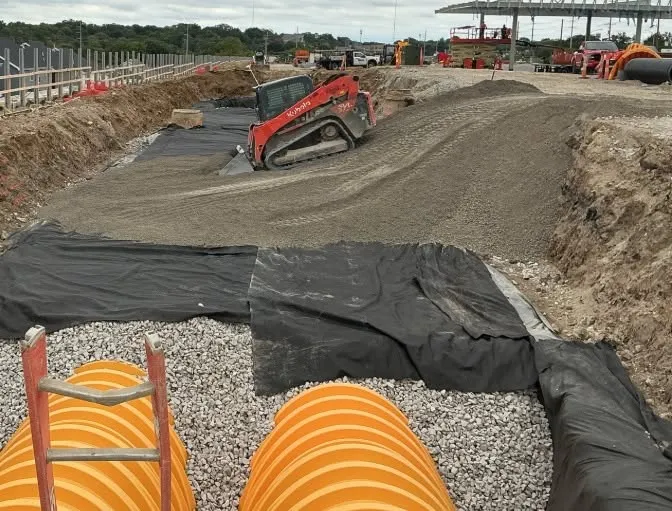
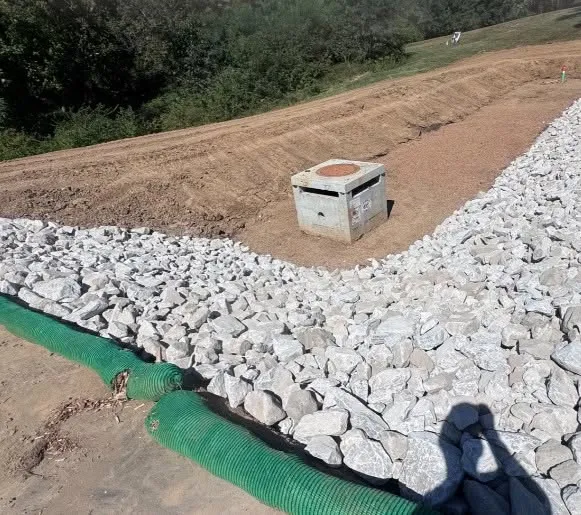
- 01Storm pipe, structures, detention and bioretention from one self-performing crew
- 02Structures set early to work as sediment control during construction
- 03Scheduled with our own grading, so inlet and pipe grades match the pad and paving