
Written and reviewed by the Kuesel field operations & estimating team
Last reviewed:
Kuesel is a family-owned site work and utility contractor based in O'Fallon, MO, building sites across St. Louis since 1963.
Erosion and sediment control best management practices (BMPs) keep soil on the site and out of streets, inlets and streams while ground is disturbed. In Missouri, Missouri DNR land disturbance permits and local requirements govern what is required on a given site. This guide explains the common measures in general terms. Our post on land disturbance permits and stormwater requirements covers permit coverage.
Common BMPs
Silt fence
Fabric fence along the downhill edge of disturbed areas slows runoff and traps sediment. It needs to be trenched in and kept upright to work.
Inlet protection
Filters or barriers at storm inlets keep sediment out of the storm sewer, both on site and at nearby street inlets.
Construction entrances
A stabilized stone entrance knocks mud off truck tires before they reach the street.
Sediment basins and traps
On larger sites, basins hold runoff long enough for sediment to settle before water leaves the site. Some are later converted to permanent detention.
Stabilization and seeding
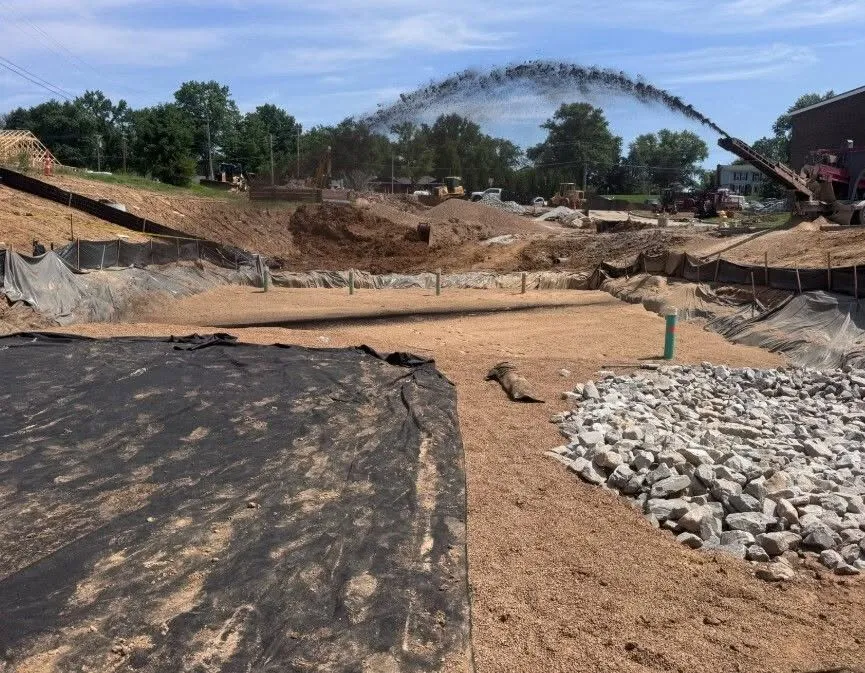
Disturbed areas are stabilized with seed, mulch, blankets or hydroseeding when work in that area stops or is finished, as the plan and permit require.
Inspections and maintenance
BMPs only work if they are maintained. Permits commonly require routine inspections and inspections after rain events, with repairs made promptly: removing sediment, fixing torn fence, replacing inlet filters and refreshing the entrance stone. Check the permit for the actual inspection schedule and record-keeping.
SWPPP basics
- A stormwater pollution prevention plan (SWPPP) describes the BMPs, where they go and when.
- It is generally kept current as the site changes.
- Inspection records are generally kept with it.
- The permit and local requirements govern its contents.
For permanent stormwater features, see our stormwater requirements guide.
Questions
- Who decides which BMPs a site needs?
- The erosion control plan prepared for the site, under the Missouri DNR land disturbance permit and local requirements that apply.
- Why inspect after it rains?
- Rain is when BMPs get tested. Inspecting afterward finds damaged fence, full inlet filters and washed-out areas so they can be fixed before the next storm.
This guide is general information from a site contractor, not engineering or legal advice. The engineer of record, the approved plans, the permits and the reviewing agencies govern your project.